by Lanx
POD Holiday Calendar 2026: When to List Seasonal Products
Most print-on-demand sellers know that holiday and seasonal products can drive significant sales. What fewer sellers know precisely is when to start preparing. Not "a few weeks before" — I mean the exact window when your listing needs to go live so Etsy's algorithm has time to index it, test it with buyers, and build up a quality score before peak demand hits.
I learned this the hard way. I launched my Etsy shop at the end of November 2025 with evergreen designs — Japanese cultural art, Kintsugi-inspired mugs, that sort of thing. Within a few weeks, I realized seasonal products could meaningfully boost my revenue. Christmas was right there. I wanted to list holiday-themed items, but it was already late November. The standard advice is to list seasonal products 6 to 10 weeks before the event. I was weeks past that deadline. So I didn't list any Christmas products at all.
That experience convinced me of something: POD sellers need a reverse-engineered calendar — not just "what holidays are coming up," but "when do I need to start designing, and when is the absolute latest I can list?" That's what this article is.
Whether you're reading this in March or bookmarking it for the rest of the year, the goal is the same: know what's ahead, prepare early, and never miss a seasonal window again.
If you're still deciding what types of products to sell, my 25+ POD Product Ideas guide covers categories with profit potential and difficulty ratings — check it out for inspiration.
The Seasonal Strategy: 3 Fundamentals for POD Sellers
Before we get into the month-by-month calendar, let's establish three principles that apply to every seasonal opportunity.
The 6-10 Week Rule
When you publish a new listing on Etsy, the algorithm needs time to do its work. It indexes your title, tags, and description. It shows your listing to a small set of potential buyers. It measures clicks, favorites, add-to-carts, and purchases. Based on those signals, it decides whether to show your listing to more people or less.
This process takes time — typically 6 to 10 weeks for a listing to reach its natural ranking potential. If you list a Valentine's Day mug on February 1st, Etsy barely has two weeks to evaluate it before the shopping window closes. By the time it gains traction, the holiday is over.
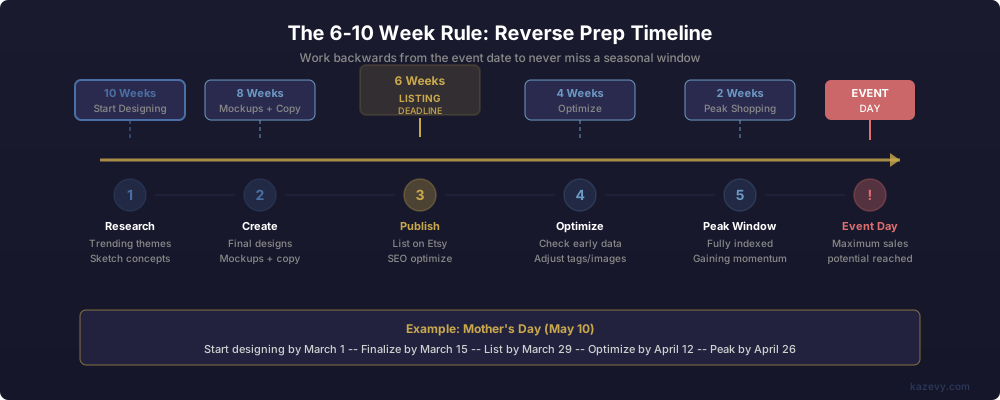
The rule: list seasonal products at least 6 weeks before the event. 8 to 10 weeks is better.
Evergreen + Seasonal: The Hybrid Approach
The most resilient POD shops don't go all-in on seasonal products. They maintain a foundation of evergreen designs that sell year-round, then layer seasonal variations on top.
For example, if you sell Kintsugi-style mugs (like I do), the base design works all year. But you could create a version with subtle holly accents for Christmas, or a version with cherry blossoms for spring. Same design DNA, seasonal twist. This is efficient because you're not starting from scratch each season — you're adapting what already works.
A good target: 70% evergreen products, 30% seasonal. The evergreen base generates steady income; seasonal items provide periodic boosts.
The Prep Timeline: Working Backwards
For each seasonal event, here's the reverse timeline I follow:
- 10 weeks before: Start designing. Research trending themes for the upcoming holiday. Sketch concepts.
- 8 weeks before: Finalize designs. Create product mockups. Write listing copy and do keyword research.
- 6 weeks before: Publish listings. This is the latest you should go live. Earlier is better.
- 4 weeks before: Optimize based on early data. Check which listings are getting views and clicks. Adjust tags, titles, or images if needed.
- 2 weeks before: Peak shopping window begins. Your listings should be fully indexed and gaining momentum by now.
I recommend keeping a simple spreadsheet with these dates for each major holiday. It takes about 30 minutes to set up at the start of the year and saves weeks of scrambling later.
2026 Month-by-Month POD Calendar
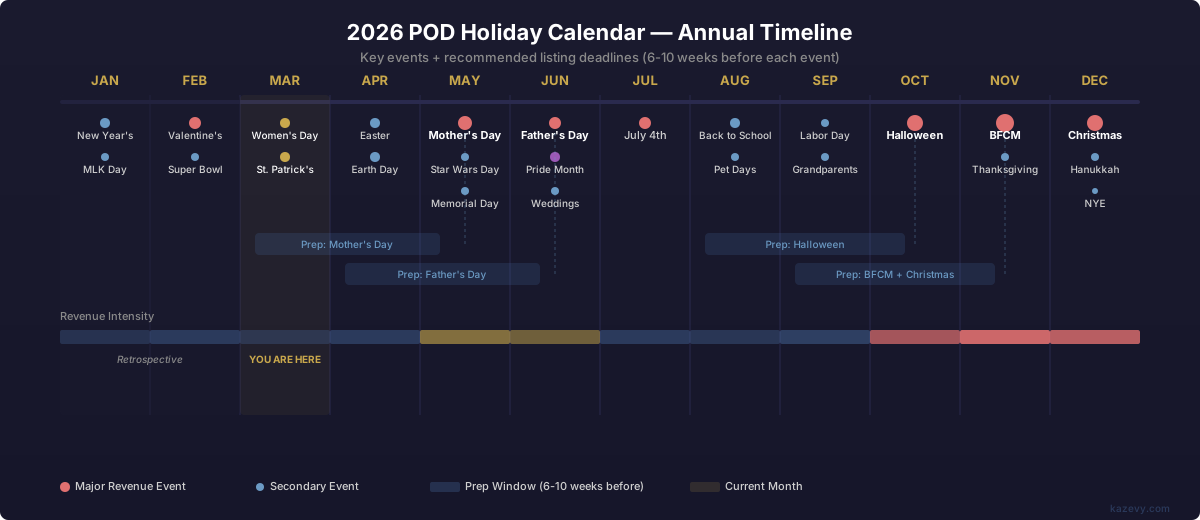
Here's the full year, broken down by month. Since this article is published in March 2026, the January and February sections are brief retrospectives — lessons to file away for next year. March onward is where the actionable planning begins.
January — New Year & Fresh Starts (Retrospective)
Key dates:
- New Year's Day (January 1)
- Martin Luther King Jr. Day (January 19)
What sells: Motivational mugs, fitness-themed apparel, planners, "new year new me" products, goal-setting stationery.
Lesson for next year: January products need to be listed by mid-November at the latest. The New Year's resolution crowd starts shopping in late December. If you plan to target this window next year, put it on your calendar for October.
February — Valentine's Day & Pets (Retrospective)
Key dates:
- Super Bowl Sunday (February 8)
- Valentine's Day (February 14)
- National Love Your Pet Day (February 20)
What sells: Couples mugs, matching t-shirts, personalized jewelry, pet accessories, "dog mom/dad" products, heart-themed home decor.
Lesson for next year: Valentine's products should be listed by early December. This is one of the earliest major gift-giving holidays, and buyers start searching in January. Pet Day products overlap nicely with the Valentine's audience — "I love my dog more than people" mugs sell surprisingly well in February.
March — Spring & Women's Day (Act Now for May)
Key dates:
- International Women's Day (March 8)
- St. Patrick's Day (March 17)
- First Day of Spring (March 20)
What sells: Empowerment-themed apparel and mugs, eco-friendly tote bags, green-themed accessories, spring floral home decor.
Your action item this month: It's too late to prepare for March events with the 6-10 week lead time. But this is exactly the right moment to start preparing for Mother's Day (May 10). Mother's Day is one of the highest-revenue holidays for POD sellers. Start designing now, and aim to list by late March or early April.
Also on your radar: Begin ideation for Father's Day (June 21) and Pride Month (June). You have a comfortable runway, but starting research now means less rush later.
April — Easter & Earth Day
Key dates:
- Easter (April 5)
- Earth Day (April 22)
- World Book Day (April 23)
What sells:
- Easter: Spring decor, pastel-themed products, bunny motifs, family gathering items
- Earth Day: Eco-friendly tote bags, nature-themed apparel, sustainable living accessories
- World Book Day: Bookish mugs, literary quote prints, reader-themed apparel
Listing deadline: Easter products should have been listed by mid-February. Earth Day and Book Day products by early March.
Prep focus: If you haven't listed for April yet, focus forward. This is your preparation month for Father's Day (June 21). Start designing "best dad" mugs, BBQ-themed apparel, and workshop/hobby-specific gifts.
May — Mother's Day & Summer Kickoff
Key dates:
- Star Wars Day (May 4)
- Mother's Day (May 10)
- Memorial Day (May 25)
What sells:
- Mother's Day: Personalized jewelry, "best mom" mugs, family-themed prints, custom photo gifts, matching mother-daughter items
- Star Wars Day: Fan merchandise (be careful with trademarked designs — stick to parody and inspired-by concepts)
- Memorial Day: Patriotic accessories, summer kickoff items, outdoor/BBQ products
Listing deadline: Mid-March to late March (for Mother's Day — this is why March is your action month).
Why this matters: Mother's Day is consistently one of the top 3 gift-giving holidays in the US. According to the National Retail Federation, consumers spent over $35 billion on Mother's Day gifts in recent years. Even a small slice of that market is meaningful for a POD seller. Personalized items perform particularly well because they feel more thoughtful than generic gifts.
Tip: If you already sell mugs or apparel, create Mother's Day variations of your existing designs. A Kintsugi mug becomes a "Mom, You Hold Us Together" Kintsugi mug. Same base design, seasonal messaging. For more on optimizing these listings for Etsy search, see my Etsy SEO Guide.
June — Father's Day, Pride & Wedding Season
Key dates:
- Pride Month (all June)
- Father's Day (June 21)
- Wedding season peaks
What sells:
- Father's Day: Drinkware (whiskey glasses, beer mugs), BBQ and grilling apparel, hobby-specific gifts (fishing, golf, woodworking), "dad joke" humor products
- Pride: Rainbow-themed accessories, inclusive designs, love-is-love messaging (approach with authenticity — the community values genuine support over opportunistic selling)
- Weddings: Bridesmaid/groomsman proposal gifts, personalized wedding party items, couple accessories
Listing deadline: Mid-April.
Prep focus: Start planning for Back-to-School (August) and begin early ideation for Halloween (October). October is one of the biggest POD events of the year — the earlier you start, the better your designs and listings will be.
July — Independence Day & Summer Peak
Key dates:
- Independence Day (July 4)
- Summer vacation season
What sells: Patriotic designs (flags, stars, red-white-blue color schemes), beachwear and summer accessories, outdoor entertaining items, camping and travel products.
Listing deadline: Mid-May.
Note: Summer products have a longer sales window than single-day holidays. Beach towels, pool accessories, and summer apparel sell from June through August, so your listing timeline is more forgiving. However, Independence Day-specific items (BBQ aprons with flag designs, patriotic mugs) follow the standard 6-10 week rule.
August — Back to School & Pet Celebrations
Key dates:
- Back-to-School season (all month)
- International Cat Day (August 8)
- International Dog Day (August 26)
What sells:
- Back to School: Personalized notebooks, teacher appreciation gifts, student apparel, backpack accessories, dorm room decor
- Pet Days: Breed-specific products, pet portrait items, "cat mom/dog dad" apparel, pet bandanas
Listing deadline: Mid-June (for Back-to-School); late June (for Pet Days).
Critical prep moment: This is when you should be finalizing designs for Halloween (October 31) and starting on Black Friday/Cyber Monday (late November). These are the two biggest revenue events for POD sellers, and the sellers who dominate Q4 started preparing in summer.
September — Fall & Grandparents Day
Key dates:
- Labor Day (September 7)
- Grandparents Day (September 13)
- First Day of Fall (September 22)
What sells: Fall-themed home decor (pumpkin motifs, warm color palettes, cozy aesthetics), family gift items, autumn apparel (hoodies, sweatshirts), harvest-themed products.
Listing deadline: Mid-July.
Prep focus: Your Halloween and Thanksgiving designs should be finalized and listed by now. If they're not, you're behind schedule. Also begin designing Christmas/Hanukkah products — yes, it feels early, but October is your ideal listing month for December holidays.
October — Halloween (Major Revenue Event)
Key dates:
- Halloween (October 31)
What sells: Spooky-themed mugs, horror art prints, costume accessories, skeleton/skull designs, witch/wizard motifs, haunted house decor, pumpkin-themed everything, "Halloween is my Christmas" apparel.
Listing deadline: Mid-August to late August.
Why this is big: Halloween consistently ranks as one of the highest-margin events for POD sellers. The themes are visually strong (skulls, pumpkins, bats, ghosts), the audience is enthusiastic, and there's enormous variety in product types. A single "cute ghost" design can work on mugs, t-shirts, tote bags, stickers, and home decor.
Design tip: Halloween buyers fall into two camps — "cute and whimsical" (families, kids) and "dark and edgy" (horror fans, goth aesthetic). You can serve both with different design lines. Dark aesthetic hoodies and spooky art prints tend to have higher average order values.
November — BFCM & Thanksgiving (Biggest Sales Month)
Key dates:
- Thanksgiving (November 26)
- Black Friday (November 27)
- Small Business Saturday (November 28)
- Cyber Monday (November 30)
What sells: Gift items across all categories, holiday home decor, Christmas-themed products (these start selling heavily in November), matching family apparel, personalized gifts of every kind.
Listing deadline: Mid-September.
The Q4 reality: For many POD sellers, Q4 (October through December) accounts for 20-30% of their annual revenue. The Black Friday through Cyber Monday weekend alone can produce more sales in four days than some sellers see in an entire month. The catch? You can't prepare for it in November. The sellers who win Q4 started planning in July and August.
Strategy: Don't discount your products aggressively unless you have the margin to absorb it. Instead, consider creating "gift bundle" listings, offering free shipping promotions, or launching limited-edition holiday designs that create urgency.
December — Christmas & Year-End (Final Push)
Key dates:
- Hanukkah (December 4-12)
- Christmas (December 25)
- New Year's Eve (December 31)
What sells: Custom ornaments, personalized gifts, winter apparel (ugly Christmas sweaters, cozy hoodies), holiday home decor, New Year's products (calendars, planners, resolution-themed items).
Listing deadline: Mid-October.
My personal lesson: This is the month that taught me about seasonal planning. When I started my shop on November 30, 2025, I could see the Christmas demand — buyers were actively searching for holiday gifts, and some of my existing mugs picked up sales simply because they worked as gifts. But I hadn't prepared any Christmas-specific designs. I watched the opportunity pass by. That's why this calendar exists: so neither of us misses the window again.
Looking ahead: Late December is when you should start planning for Valentine's Day (February 14). The cycle continues.
Product Category x Season Matrix
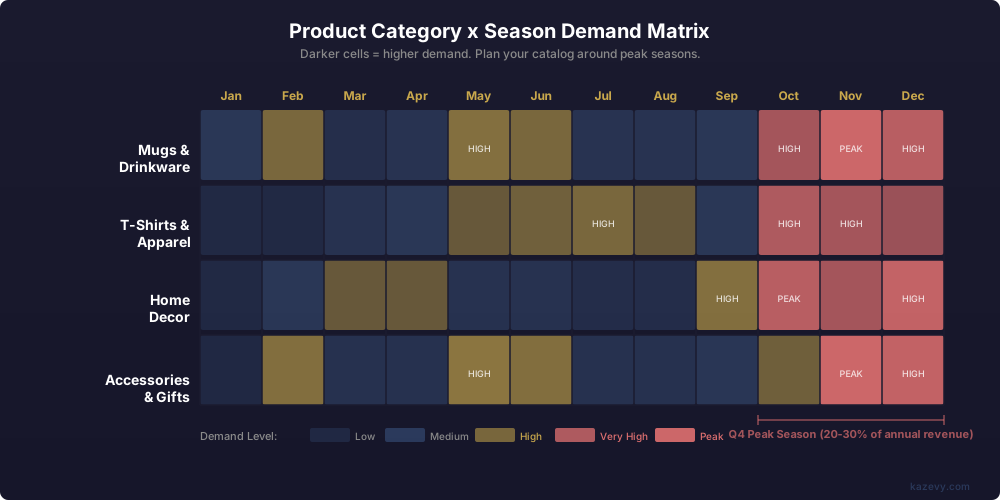
Different product types peak at different times. Here's a quick-reference guide for the four major POD categories:
Mugs & Drinkware
Mugs sell year-round, but they peak dramatically during gift-giving holidays. The biggest months are October through December (Halloween mugs, Christmas mugs, holiday gifts), with secondary peaks around Mother's Day (May) and Father's Day (June). Valentine's Day (February) also drives strong mug sales — "his and hers" sets and romantic quotes are consistent performers.
Steady months: January (New Year motivational), March-April (spring themes), September (back-to-cozy-season).
T-Shirts & Apparel
Apparel has a different rhythm. The heaviest demand is during summer (June-August) for casual wear and Q4 (October-December) for hoodies and sweatshirts. Halloween is enormous for themed t-shirts. Holiday ugly sweaters and winter hoodies drive November-December sales.
Off-peak strategy: Spring (March-May) is a good time for lighter apparel — graphic tees for Earth Day, Mother's Day themed shirts, graduation tees.
Home Decor
Home decor follows seasonal transitions. Spring (March-April) brings demand for fresh, floral pieces. Fall (September-October) is the biggest window — pumpkins, harvest themes, cozy aesthetics. December brings holiday decor. The key with home decor is that buyers often redecorate seasonally, so you have repeat-purchase potential if your designs are strong.
Accessories & Gifts
Accessories (jewelry, tote bags, phone cases, stickers) are gift-driven, meaning they cluster around major gift-giving events: Valentine's Day, Mother's Day, Father's Day, Graduation, and Christmas. Stickers are an exception — they sell steadily year-round with a slight Q4 bump.
Your Action Plan: What to Prepare Right Now
Today is March 2026. Here's what should be on your immediate to-do list:
This Month (March)
- Design Mother's Day products — This is your top priority. Listing deadline is late March to early April. Personalized items, "best mom" themes, floral designs.
- Research Father's Day themes — Start brainstorming. What hobbies and interests can you target? BBQ, fishing, golf, tech, music, woodworking.
- Audit your Easter listings — If you have Easter products listed, check their performance. If not, note this for next year's calendar.
Next Month (April)
- List Father's Day products — Aim to have these live by mid-April at the latest.
- Begin Pride Month designs — Rainbow themes, inclusive messaging. List by early May.
- Start wedding season products — Bridesmaid proposals, matching couple items, wedding party gifts.
May-June
- List Independence Day products — Red, white, blue. Patriotic themes.
- Begin Back-to-School planning — Teacher gifts, student products, dorm decor.
- Start Halloween ideation — Yes, in May. The best Halloween sellers start early.
July-August
- Finalize and list Halloween products — This is your listing window for October.
- Begin Thanksgiving/BFCM planning — Gift bundles, holiday promotions.
- Start Christmas product design — Ornaments, holiday mugs, winter apparel.
September-October
- List Christmas/Hanukkah products — Your listing deadline for December holidays.
- Prepare BFCM promotions — Free shipping, bundle deals, limited editions.
- Plan New Year's products — Calendars, planners, resolution-themed items.
November-December
- Execute BFCM sales strategy — Your products should already be listed and indexed.
- Monitor and adjust — Check which holiday listings are performing and double down.
- Plan next year — Start mapping out January and February events for 2027.
Key Takeaways
- When you list matters as much as what you list. A great design posted too late will never reach its sales potential.
- The 6-10 week rule is your north star. Count backwards from the event date and mark your listing deadline.
- Start with the next upcoming event. Right now, that's Mother's Day (May 10). Design today, list by late March.
- Build a hybrid catalog. Keep 70% evergreen products for steady income, and add 30% seasonal items for periodic boosts.
- Plan Q4 in the summer. Halloween, Thanksgiving, and Christmas are the biggest revenue events for POD sellers, and the preparation window starts months earlier than most people expect.
The seasonal calendar isn't complicated. It's just disciplined. Set your dates, work backwards, and execute on schedule. That's the difference between sellers who catch every wave and those who keep saying "I'll be ready next time."
I'm building Kazevy — a creative workflow studio for POD sellers. From AI-assisted design to SEO optimization and catalog management, the goal is to help creators move from idea to listed product with confidence.
If you want to streamline your seasonal planning workflow, join the waiting list.
— Lanx
Lanx
Founder & POD practitioner at Kazevy. Building tools for print-on-demand sellers from Southeast Asia.